Water Tables vs Downdraft Tables: Find the Best Fit for Your Plasma Cutting Needs
When it comes to plasma cutting, the choice of table system can have a significant impact on your operation’s efficiency and quality. Two popular systems are water tables and downdraft tables, each with its own set of advantages and drawbacks. In this blog, we’ll explore the differences between these systems to help you make an informed decision about which one is best suited for your needs.

What is a Water Table?
A water table works by submerging the cutting area in a layer of water, which serves multiple purposes. The primary function is to capture the smoke and fumes produced during plasma cutting, keeping the air clean and reducing the need for extensive ventilation systems. Water also helps to cool down parts after cutting, making them easier to handle. Additionally, it aids in stabilizing the plasma arc, improving cutting accuracy and quality, especially for smaller parts.
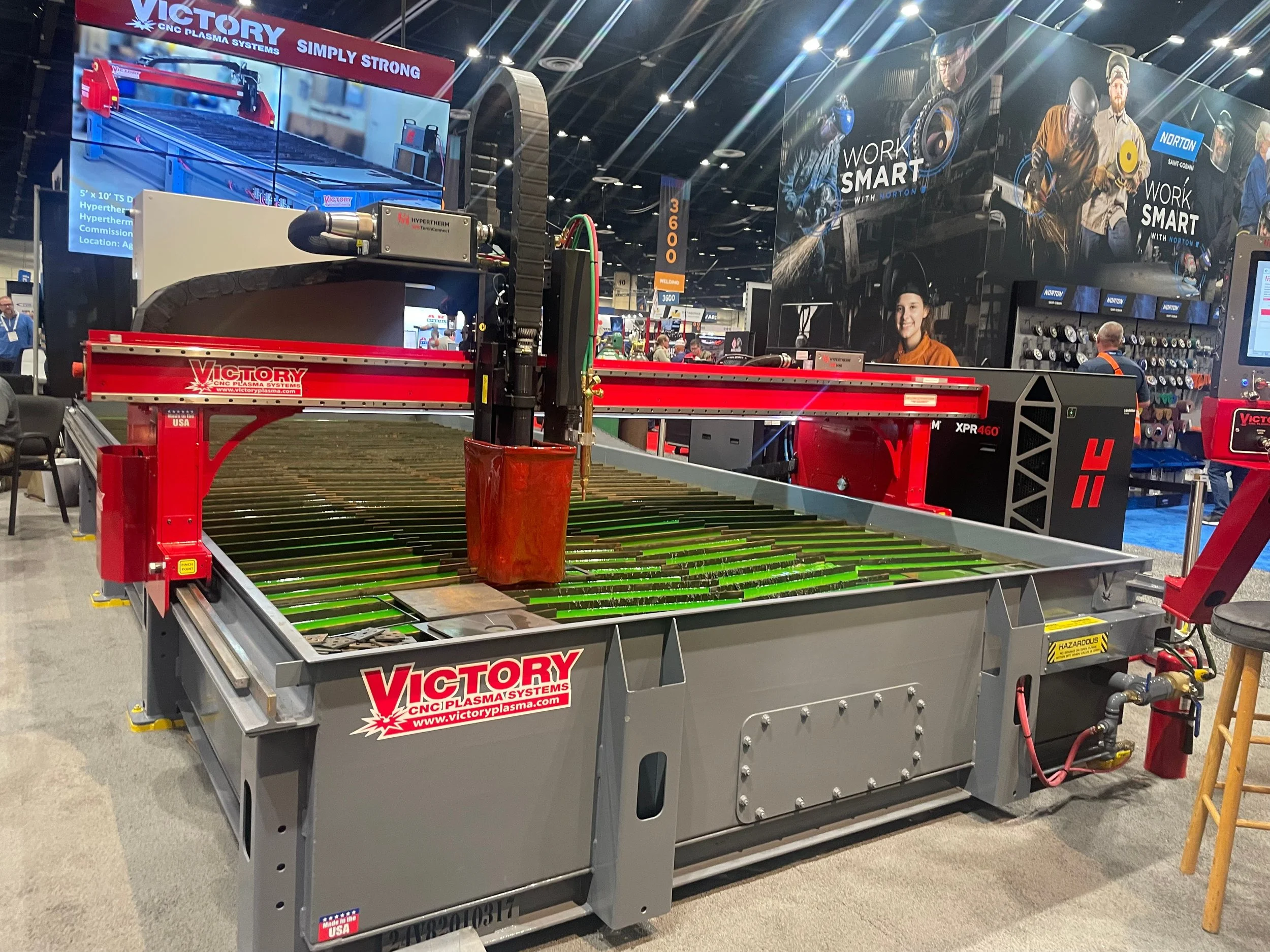
Advantages of Water Tables:
Low Cost: Lower upfront cost which is an advantage for shops looking to get into plate processing for a lower barrier to entry.
Cooling and Handling: The water helps cool down parts quickly, allowing for faster post-cutting handling and reducing the risk of heat distortion.
Low Maintenance: Water tables require less ongoing maintenance compared to downdraft tables, as they do not rely on complex ventilation systems.
What is a Downdraft Table?
A downdraft table, in contrast, relies on airflow to capture smoke and fumes. The table is equipped with a suction system that pulls the air down through vents located underneath the surface. Downdraft tables require additional investments in ductwork or dust collectors to handle the air extraction process effectively.
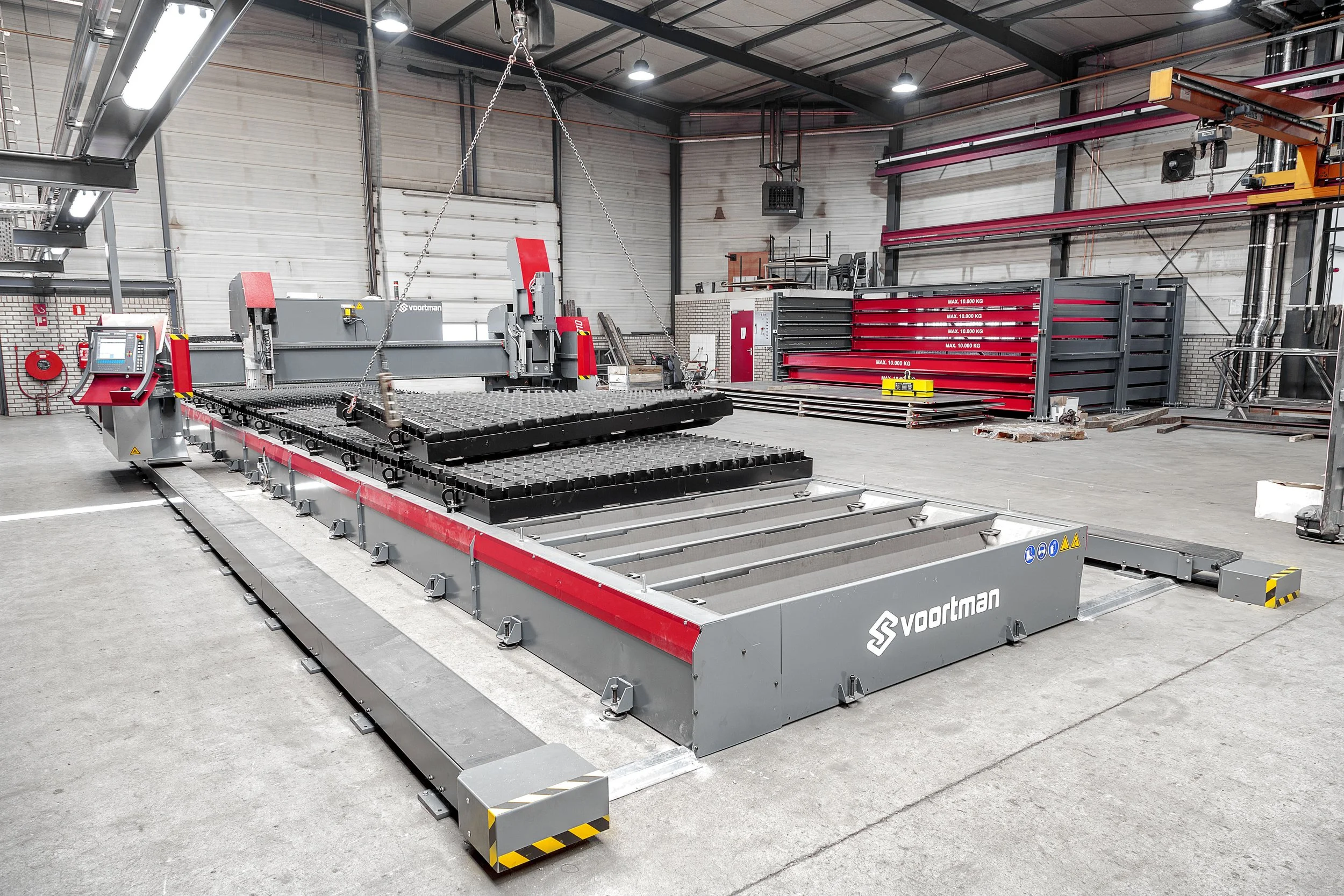
Advantages of Downdraft Tables:
Controlled Airflow: Downdraft tables offer controlled airflow, which helps to clear the area of fumes during operation in a specific cutting area with the tables CNC system.
No Water: For those looking to avoid water-related issues, such as corrosion or rust, downdraft tables provide a dry environment.
Modular Table: Sections can provide easy of use to maintain the table allowing lifting points to grab smaller parts that might fall throw when cutting is completed.
Ideal for Larger Shops: Downdraft tables are often favored for larger shops that have the power and space that is required for a dust collection system to be paired with a downdraft. .
Comparing the Two: Which Is Best for Your Fabrication Shop?
For fabrication shops, whether small or large, the choice between water tables and downdraft tables hinges on your specific production needs.
Water tables are perfect for smaller to mid size shops that are on a budget / power restriction that requires superior smoke capture.
Downdraft tables are often preferred for shops that have more room and need a cleaner solution with less maintenance downtime.
Ultimately, for most fabrication operations, water tables offer a more cost-effective solution. However, downdraft tables are beneficial for multiple reasons in that they are easier to maintain and clean since both systems require maintenance when replacing the table after wear and tear.
Conclusion
When deciding between a water table and a downdraft table for your plasma cutting needs, it’s crucial to consider the type of work you do, the size of your materials, and your shop’s air quality requirements and maintenance procedures.
For more information on plasma cutting systems contact us today to find out more.